When Gayle Maudlin baked yeast rolls for the chicken and noodle dinners that paid the mortgage on the Meeting House in Kokomo the aroma that filled the place was absolutely delightful. It’s hard to imagine that mixed with a little warm water, margarine, salt, yeast, powdered milk, sugar, eggs and bread flower, allowed to rise and beaten back and allowed to rise again and then baked could produce such a delectable fragrance. These weren’t just any ordinary yeast rolls – they had a special name, Brioche. And to butter one still warm is a taste I’ll never forget.
Jesus said to them, “I am the bread of life. He who comes to Me shall never hunger, and he who believes in Me shall never thirst. . . . . I am the living bread which came down from heaven. If anyone eats of this bread, he will live forever; and the bread that I shall give is My flesh, which I shall give for the life of the world.” ~ John 6:35, 51 It is really hard for us to grasp the meaning for Jesus and his followers caught up in the words ‘The Bread of Life’.
An important shift occurs in the text. The story begins with Jesus having a conversation with those who followed him from where they had been fed on the five loaves and two fish. To them Jesus identified himself with the statement “I am the bread of life.” We read this in contrast with the crowd’s sense that it was the bread from the miracle that filled them up that it is, in fact, Jesus who is capable of sustaining life. According to John, all of a sudden, those with whom Jesus is engaged are not the locals, they are ‘the Jews” by which John means Jesus’ adversaries. What had been simple language becomes dense and argumentative. Conflict frames the discussion. The Jews put their own spin on the words Jesus spoke recorded in verses 35 and 38. He had not yet said: “I am the bread who came down from heaven.” They know who Jesus is. They know his parents Mary and Joseph. This is Jesus, and he did not come down from heaven.
Contentious as they are, these are his people. They bring more to this discussion about the Bread of Life than we can imagine. In Jesus’ rich religious tradition his family, as well as those with whom he is engaged, annually celebrated the Hebrew children’s escape from Egyptian bondage, the Passover. One particular part of that observance was the bread, the bread of affliction, the bread baked in haste. The taste, smell and texture of the matzah created an indelible memory in the mind of every child, a piece of their religious heritage that would be forever with them, a tugging reminder of who they are as a people in the world, a people who have known suffering and oppression and also a people who have known God’s grace.
But it was even more than that. It is wrapped up in the dietary rules, this keeping kosher. And we are foolish enough to think that it is actually about eating healthily. To eat kosher has repercussions in the whole scope of life. It has to be deliberative. It is training for self discipline and self control. Not eating anything you like whenever you might like is foundational for not giving in to other harmful aspects of life and how we treat ourselves as well as others. Kosher really means doing the proper thing that includes how “the Jews” relate to Jesus.
Woven into this approach to eating is a simple respect for life. Brown eggs are proscribed because the color of the shell keeps you from avoiding eggs with the forbidden blood spot – you can’t eat blood because it contains the very force of life. You don’t mix life giving milk with death caused meat. And maybe the most important piece of this misunderstood tradition is that Kosher is based on the root meaning of kadosh – holy. It translates as separate. But from what does it separate us? From that which is impure, from that which brings something undesirable into the world, like a lack of self control, a lack of respect for life, like forgetting God in all aspects of our daily life. Keeping Passover, eating not only the bread of affliction, the Matzah for seven days but delighting in the other Passover cakes and biscuits as well, recipes for which have been passed down for generations, are a part of the very bread of life.
Sometimes I think that our reluctance to incorporate the sensible, the sensate, the sensual into our daily spirituality is an enormous mistake. I don’t, for a minute, think that the regular ingesting of a dry wheat wafer, a saltine cracker or even a piece of cold stale yeast roll can accomplish what Judaism succeeds in doing within the Seder meal.
There is another piece of Jesus’ rich religious tradition that focuses on bread. Not the bread of haste, the matzah of the Seder meal, but the manna that sustained Israel during its wandering in the wilderness. David repeatedly called this bread to mind: “Yet He had commanded the clouds above, And opened the doors of heaven, Had rained down manna on them to eat, And given them of the bread of heaven. Men ate angels’ food; He sent them food to the full.” ~ Psalm 78:23-25
“I am the LORD your God, Who brought you out of the land of Egypt; Open your mouth wide, and I will fill it. . . . He would have fed them also with the finest of wheat; And with honey from the rock I would have satisfied you.” ~ Psalm 81:10, 16
We learn from Jewish sources that manna was the most miraculous of foods. It was easy to pick, like a seed, it was white so it was easily found, since it fell on a layer of dew it was clean and it could be eaten raw or cooked and because of its creamy texture it was easy to swallow. Yet, the apparently contradictory versions in the Torah regarding manna raised some questions like: Did the manna taste like bread, like honey, or like oil? Did the dew fall upon the manna or did the manna fall upon the dew? Did the manna arrive as bread, unbaked dough, or did the people grind it? Did the manna fall inside the camp or did the people have to out to gather it?
To reconcile the varying traditions, the rabbis made manna ever more wondrous and special. Thus, in the midrash, we read that: Young men tasted in it the taste of bread, old people the taste of honey, and infants the taste of oil. For the righteous the rabbis decided that it came right down to the doors of their tents; ordinary people had to go out and gather it; but the wicked had to go and search to gather it. The righteous received it baked as bread, ordinary Israelites received it in the form of unbaked dough, and to the wicked it came as grain yet to be ground in a hand mill.
Rabbi Mendel of Rymanov was asked how to interpret another aspect of Manna, the words God added when Moses was told that the people were to gather a day’s portion of manna every day: “…that I may prove them whether they will walk in my law or not.” He explained: “If you ask even a very simple man whether he believes that God is the only God in the world, he will give the emphatic answer: ‘How can you ask! Do not all creatures know that He is the only one in the world!’ But should you ask him if he trusts that the Creator will see to is that he has all that he needs, he will be taken aback and after a while he will say: ‘Well, I guess I haven’t reached that rung yet.’
“But in reality belief and trust are linked, and one cannot exist without the other. He who firmly believes, trusts completely. But if anyone — God forbid — has not perfect confidence in God, his belief will be faint as well. That is why God says: ‘I will cause bread to rain from heaven for you’: that means ‘I can cause bread to rain bread from heaven for you.’ But he who goes in the path of my teachings, and that means he who has belief in me, and that means, he who has trust in me, gathers a day’s portion every day and does not worry about the morrow.”
Historians tell us that we can’t understate the importance of bread in the development of civilization. Bread baked over thirty thousand years ago has been unearthed. From the western half of Asia, where wheat was domesticated, cultivation spread north and west, to Europe and North Africa. Bread enabled human beings to become farmers rather than hunters and foragers. It enabled people becoming city dwellers as opposed to being nomads.
Bread comes in all shapes, flavors and forms. Typically it is made from accessible and affordable ingredients. I lost count of all the names people around the world call bread. The latin root word for bread is pan and pan when used as a pre-fix it has come to refer to everything – like panorama or pantheism or pan-american.
Why do we need bread at all? Because we are dependent creatures. Unlike God who needs nothing we were created to need. We need food, air, water, and love in all its forms – physical, emotional, and spiritual. Could it be that the living bread is the creative word of God, the things of God, spiritual and heavenly things? We spiritually eat and digest living bread when we meditate on the living word of God, then obey them by living them out. As a result, our thoughts and desires – our minds and hearts are fed, and we mature and become who it is that God intends us to be. We were also created to desire these things. How else can our minds, hearts, and bodies grow? We need good spiritual food to live. Listen to these verses from scripture: “As newborn babes, desire the pure milk of the word, that you may grow thereby, if indeed you have tasted that the Lord is gracious.” ~ 1 Peter 2:2-3 or “With my soul have I desired thee in the night.” ~ Isaiah 26:9 and oh yes, “Oh, taste and see that the LORD is good; Blessed is the one who trusts in Him!” ~ Psalm 34:8
Jesus said to them, “I am the bread of life. He who comes to Me shall never hunger, and he who believes in Me shall never thirst. . . . .
Continue reading →
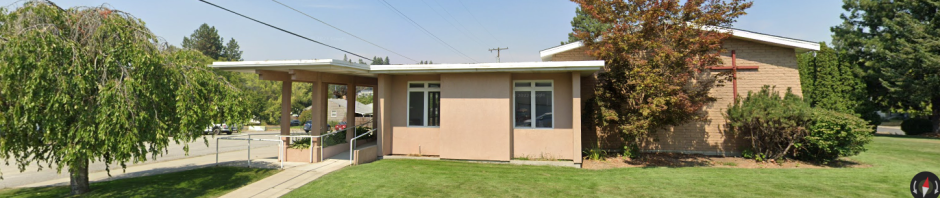
 Spokane Friends Meeting
You must be logged in to post a comment.